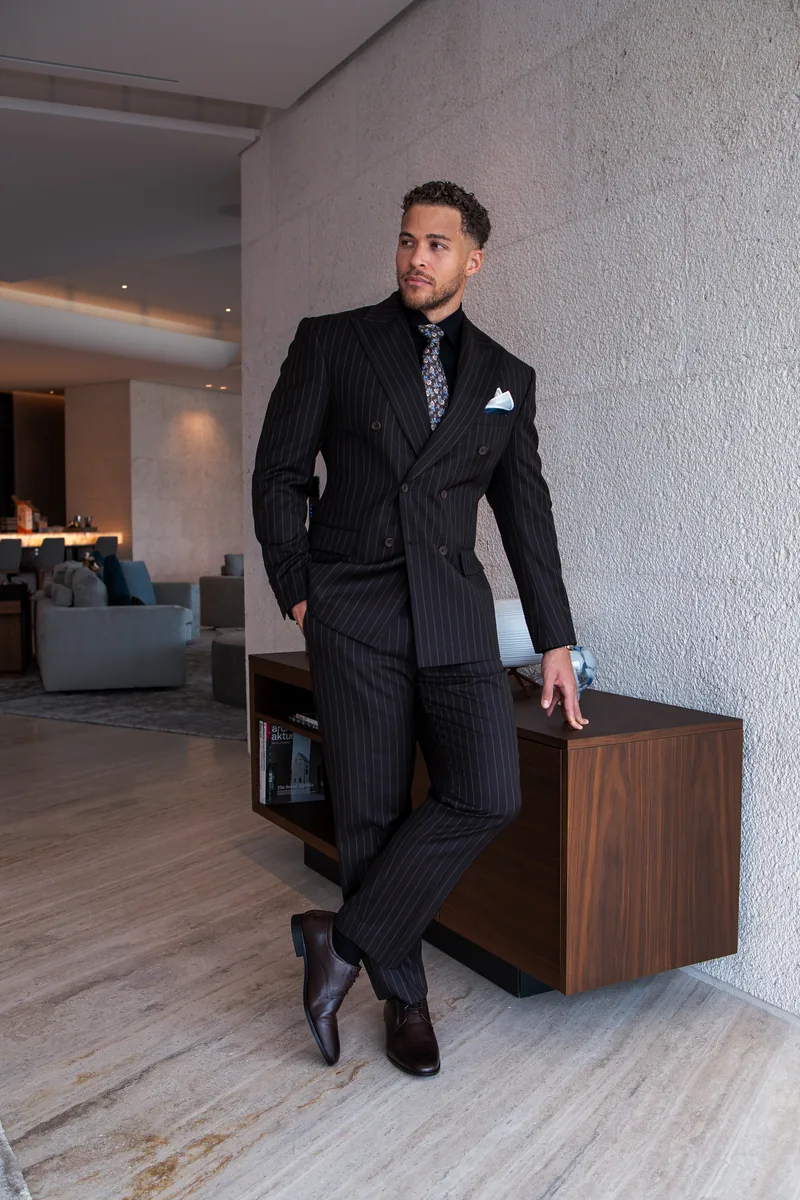
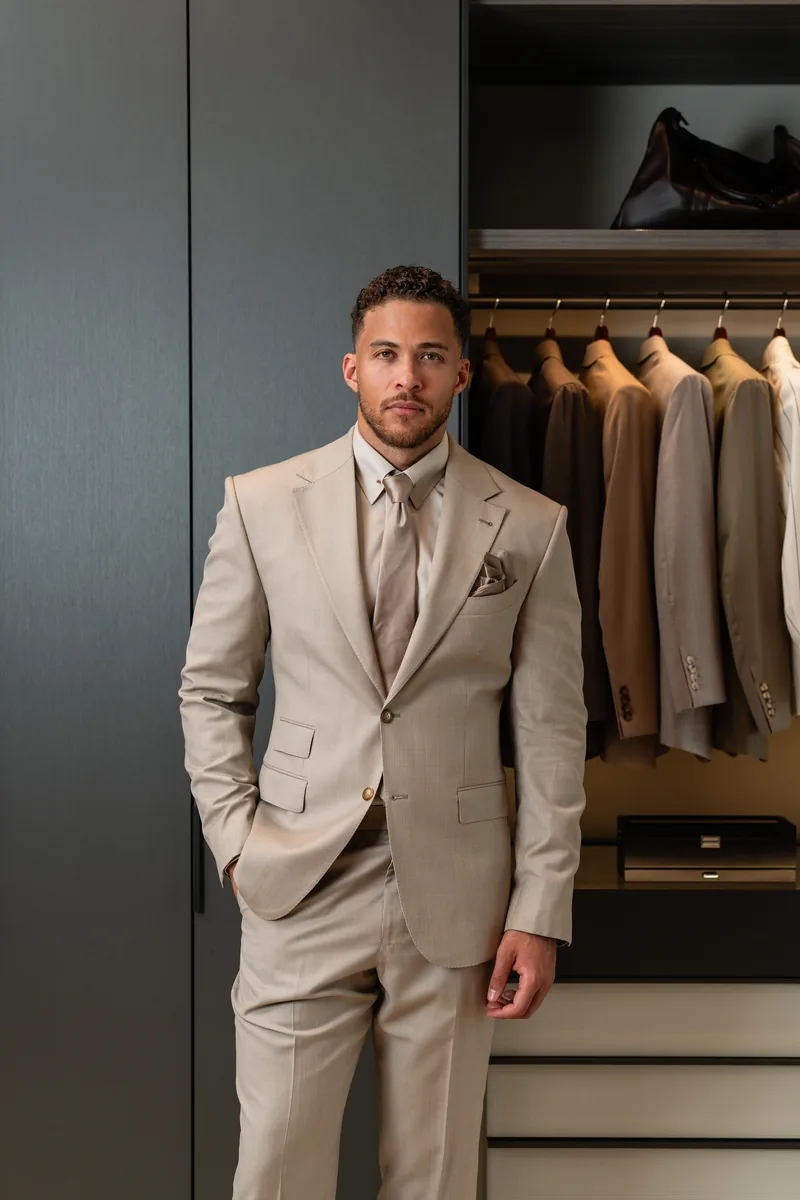
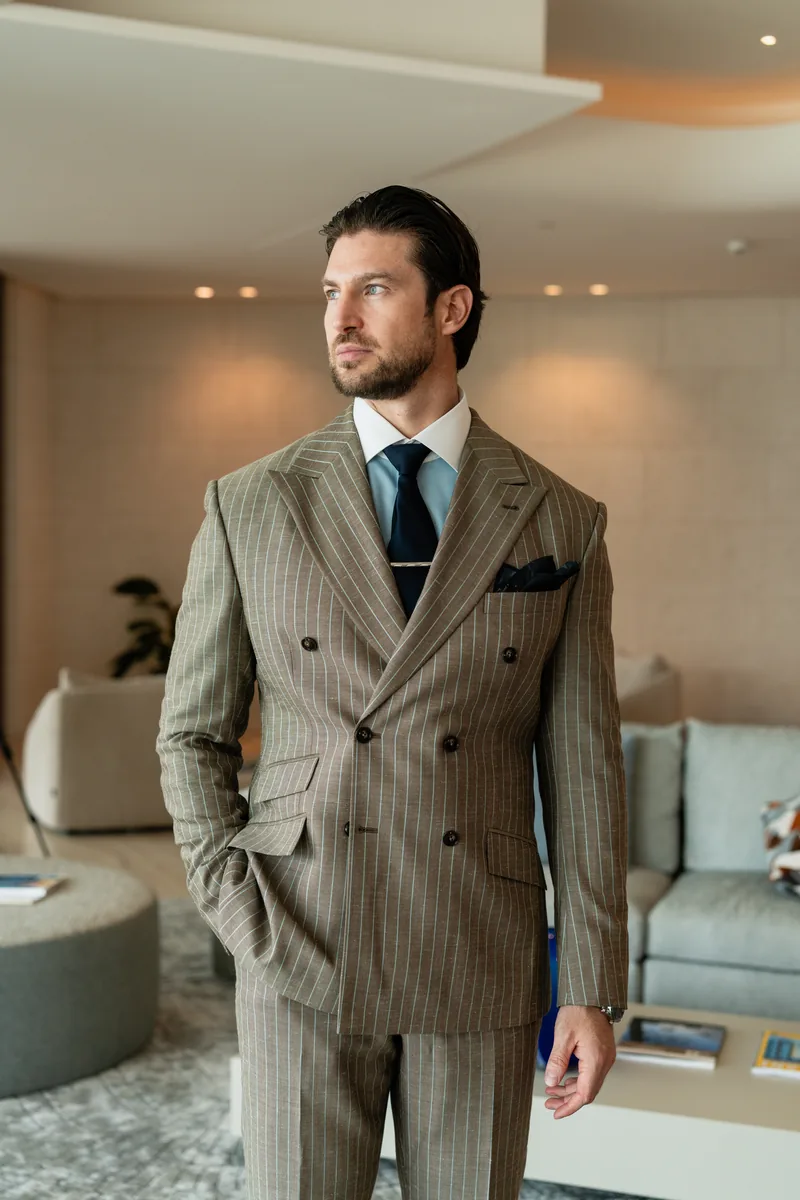
For most of the year in Dubai, the most comfortable suit fabric is a lightweight, open-weave wool: a tropical wool of around 230 to 260 grams per metre, or a high-twist cloth often called fresco. Both let air through, recover from creases and still look sharp in an air-conditioned office. A linen suit is cooler again, but it creases easily and suits daytime, outdoor and smart-casual occasions better than the boardroom. Blends of wool, silk and linen sit in between, and wool and mohair is the cloth to choose for evenings. This guide compares each option, explains why the weave and weight of a cloth matter more than its label, and suggests how to plan a wardrobe around Dubai’s seasons.
Quick comparison: suit fabrics for Dubai
| Fabric | Feel in the heat | Creasing | Best for | When in Dubai |
|---|---|---|---|---|
| Tropical wool (230 to 260 g) | Cool, breathable | Recovers well overnight | Office, meetings, everyday suits | All year |
| High-twist wool / fresco (240 to 300 g) | Very breathable, slightly dry handle | Excellent, springs back | Travel, long days, daily wear | All year |
| Linen | The coolest option | Creases quickly | Daytime events, outdoor weddings, smart-casual | Spring and summer days |
| Wool, silk and linen blend | Cool with a soft sheen | Moderate | Smart daytime, weddings, relaxed tailoring | All year |
| Wool and mohair | Cool and crisp, holds its shape | Very good | Evening events, black tie, ceremonies | Evenings, all year |
| Cotton and seersucker | Light, casual | Moderate to high | Casual jackets, weekend tailoring | Daytime |
| Flannel, tweed, heavy worsted (320 g+) | Warm | Good | Travel to cold climates | Rarely, in Dubai itself |
Why weave and weight matter more than the fibre
Two cloths made from the same wool can feel completely different in the heat. What decides it is how the cloth is built.
Weight. Suit cloth is described in grams per metre. Below about 260 g is lightweight and suits Dubai for most of the year. Between 280 and 320 g is a standard year-round weight in cooler countries, and above that is a winter cloth.
Weave. An open weave, where you can see light through the cloth when you hold it up, lets air move through the jacket. A dense, tightly packed weave traps warm air against the body, however light it is.
Yarn twist. High-twist yarns are spun tightly so they act like fine springs. The cloth they make is porous, resists creasing and recovers quickly after a day of sitting, driving and walking between car parks and offices.
Super numbers. Labels such as Super 110s or Super 150s describe how fine the wool fibre is, not how cool the cloth will feel. Very fine wools are soft and drape beautifully, but they are also more delicate and crease more easily. For a suit you will wear several times a week in Dubai, a moderate Super number in an open weave usually performs better than the finest cloth in the book.
Tropical wool: the everyday answer
Tropical wool is a lightweight worsted in a plain, open weave. It is the cloth we recommend most often for working suits in Dubai, because it does almost everything well. It breathes in the heat, holds a crease in the trousers, drapes cleanly and recovers overnight on a good hanger. It also takes colour well, so navy, charcoal and mid-grey look rich rather than flat.
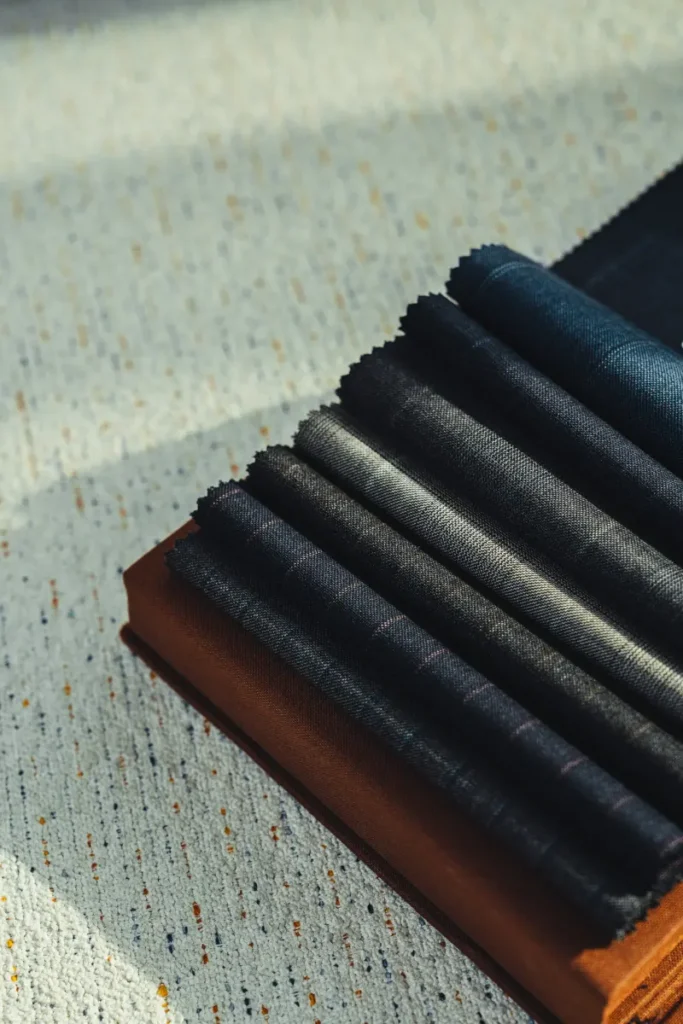
If you are commissioning your first suit and will wear it to the office, tropical wool is the safe and sensible choice.
Fresco and high-twist cloths: built for long days
Fresco began life as a trade name for a high-twist, open-weave wool, and the word is now used loosely for this whole family of cloths. They have a slightly dry, crisp handle that some clients love immediately and others take a week to appreciate. Their strength is resilience: you can sit through a flight or a long day of meetings and the creases fall out by the time you stand up.
For executives who travel, attend back-to-back meetings or simply want a suit that looks the same at 7pm as it did at 8am, a high-twist cloth is hard to beat.
Is a linen suit a good idea in Dubai?
Yes, for the right occasions. Linen is the coolest suit fabric available. The fibre is strong, absorbs moisture and dries quickly, and a linen jacket feels noticeably lighter on the shoulders in the midday sun.
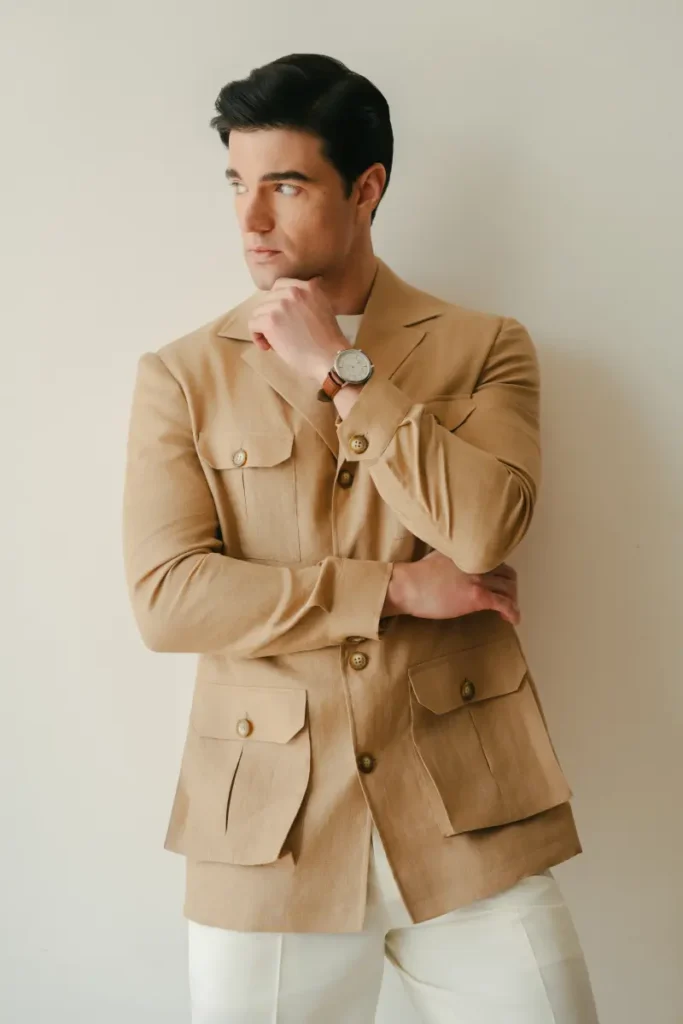
The trade-off is creasing. Linen wrinkles within minutes of sitting down, and that relaxed, lived-in look is part of its character. It works beautifully for daytime weddings, garden parties, beach and desert events, and smart-casual dinners. It is less suited to formal business settings, where a creased jacket can look careless.
A few practical points for a linen suit in Dubai:
- Choose a heavier linen. Paradoxically, a slightly heavier linen of around 280 to 320 g creases less and hangs better than a very light one, while still feeling cool.
- Consider an unlined or half-lined jacket. Removing most of the lining is the single biggest step you can take to make a jacket cooler.
- Pick a lighter colour. Sand, stone, light grey and pale blue reflect the sun and suit linen’s texture.
- Accept the creases. Steam the suit before you wear it, then let it relax through the day.
Blends: the middle ground
Blending fibres lets a cloth borrow the best of each. A wool, silk and linen blend has the coolness and texture of linen, the recovery of wool and a soft sheen from the silk. It creases less than pure linen and looks smart enough for daytime weddings and relaxed business settings.
Wool and mohair is the other blend worth knowing. Mohair adds a crisp, slightly lustrous finish and a natural resistance to creasing. It is a traditional choice for evening wear and black tie in warm climates, and it keeps its shape through a long evening. Our guide to the black-tie dress code in Dubai explains where it fits in formal dress.
Fabrics to keep for travel
Flannel, tweed, corduroy and heavy worsteds are beautiful cloths, but they belong in the wardrobe of a client who travels to London, New York or Europe in winter rather than in a Dubai rotation. Be wary, too, of cloths with a high polyester content: they can look smart on the hanger but trap heat and moisture against the body.
Construction matters as much as cloth
A cool cloth can be undone by a hot jacket. When we make a suit for Dubai, we look at the whole garment:
- Lining. A half-lined or unlined jacket releases heat far more easily than a fully lined one.
- Canvas. A bespoke jacket is built on a sewn canvas, which breathes and moves with you. Cheaper suits often use a glued interlining, which is stiffer and less breathable.
- Shoulders. A softer shoulder with lighter padding is cooler and more comfortable for long wear.
- Trousers. A half lining to the knee, or none at all, makes trousers noticeably cooler.
Planning a wardrobe around Dubai’s seasons
Dubai has two tailoring seasons. From roughly October to April, daytime temperatures are comfortable, events move outdoors and you can wear almost any lightweight cloth. From May to September, temperatures regularly pass 40°C outside while offices, malls and hotels stay heavily air-conditioned.
That contrast is why tropical and high-twist wools are so useful here: they keep you comfortable on the walk from the car and presentable in a cold meeting room. Add a linen or blended suit for daytime events in the cooler months, and a wool and mohair suit or tuxedo for evenings. If you are building a working wardrobe from scratch, our guide to building a business wardrobe in Dubai sets out how many suits you need and in which order to commission them.
Choosing your cloth with a tailor
Fabric is easier to choose in the hand than on a screen. Hold a swatch up to the light to see the weave, crush a corner in your fist to see how it recovers, and drape it over your arm to see how it falls.
At Ateliier De Soul, our fabric books include cloths from mills such as Loro Piana, Ermenegildo Zegna, Scabal, Holland & Sherry and Vitale Barberis Canonico, alongside linens, wool and silk blends and travel-friendly high-twist wools. Fabric is one of the biggest factors in what a suit costs, so we confirm the price for the cloth you choose at your consultation, before anything is cut.
Consultations take place at our atelier in Oud Metha or, through The Moving Tailor, at your home, office or hotel anywhere in Dubai, with the fabric books brought to you. See our bespoke suits in Dubai for how the process works, then book an appointment or message us on WhatsApp at +971 56 506 6543 and tell us when and where you plan to wear the suit.
Frequently asked questions
What is the best suit fabric for Dubai’s heat?
For most occasions, a lightweight tropical wool or a high-twist wool such as fresco, in an open weave of around 230 to 280 grams per metre. Both breathe well, recover from creases and look smart in air-conditioned offices. Linen is cooler still, but it creases quickly and suits daytime and smart-casual events better.
Is a linen suit too casual for work in Dubai?
For formal business settings, usually yes, because linen creases within minutes of sitting down. A wool, silk and linen blend gives you some of linen’s coolness and texture with fewer creases, and works well in more relaxed offices.
Is wool too hot to wear in Dubai?
No. Lightweight, open-weave wools are among the most comfortable cloths for warm climates because wool breathes and handles moisture well. What makes a suit hot is a heavy, dense cloth and a fully lined jacket, not wool itself.
Do higher Super numbers mean a cooler suit?
Not necessarily. Super numbers describe how fine the wool fibre is. Finer wools feel softer but are more delicate and crease more. The weight and weave of the cloth have a far bigger effect on how cool a suit feels.
What colour suit is coolest in Dubai?
Lighter colours such as light grey, sand, stone and pale blue reflect more sunlight and feel cooler outdoors. For business, mid-grey and navy in a lightweight cloth are the most versatile choices.