If you wear a suit every working day in Dubai, you need at least three business suits, and four or five is better. Three suits let each one rest for a day or two between wears, which is what keeps wool looking sharp in the heat. If you wear a suit two or three days a week, two suits and three to five shirts will cover you. Shirts matter more than most men expect: in Dubai you will change your shirt every day, so plan for five to ten. The simplest way to build that wardrobe is the one-pattern method: have a single pattern drafted to your measurements, perfect it at the fittings, then cut every suit and shirt from it so the whole wardrobe fits the same way. This guide sets out how many pieces you need, in what order to commission them and which cloths work for Dubai’s offices.
How many business suits do you need in Dubai?
It depends on how often you wear one. Use this as a starting point:
| Suit days per week | Suits | Shirts | A sensible start |
|---|---|---|---|
| 1 to 2 (client meetings, events) | 2 | 3 to 5 | Two suits and three shirts, then add shirts |
| 3 to 4 | 3 | 5 to 8 | Three suits and five shirts |
| 5 (suit every day) | 4 to 5 | 8 to 10 | Three suits and five shirts now, add one or two suits within the year |
Why not one suit worn every day? Wool needs time to recover. After a day of wear, especially in Dubai’s humidity, the fibres hold moisture and the cloth loses its shape at the elbows and knees. Hung on a shaped hanger for 24 to 48 hours, a good wool suit sheds those creases and dries out naturally. Rotating suits this way also means fewer trips to the dry cleaner, which is one of the quickest ways to wear out a suit.
In what order should you build the wardrobe?
Start with the colours that work hardest, then add character. A typical order for a Dubai executive:
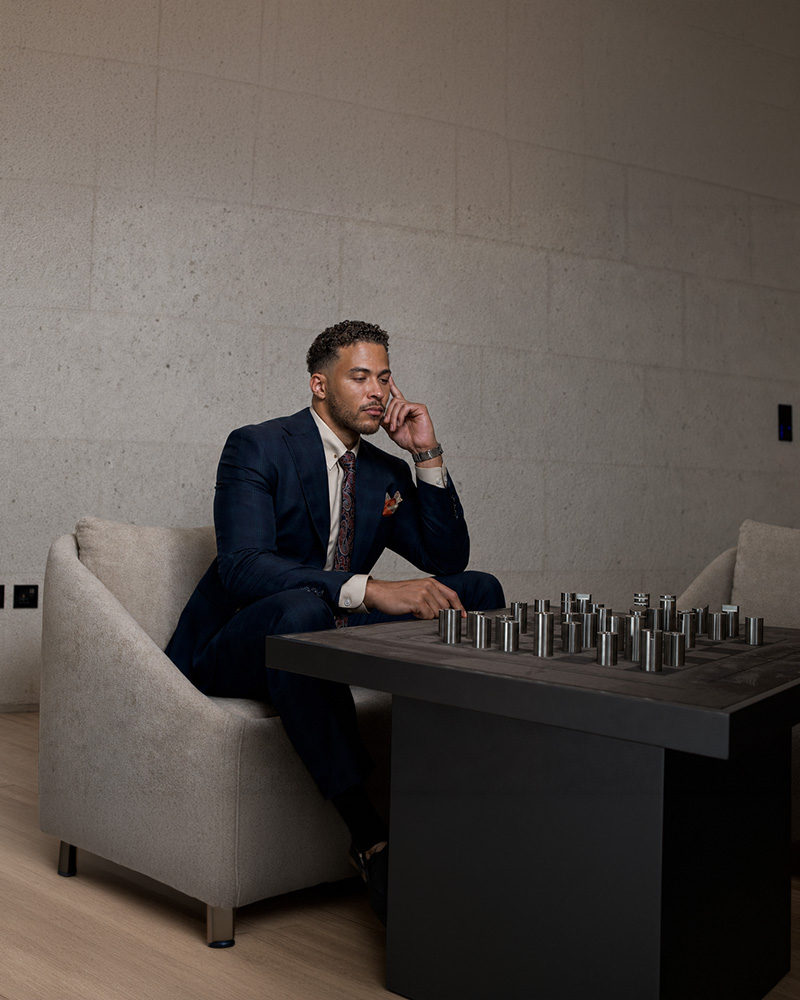
- Navy, plain or with a very subtle texture. The most versatile business colour. It works with white, blue and pink shirts, and with or without a tie.
- Charcoal or mid-grey. More formal than navy and ideal for board meetings, banks and government settings.
- A lighter grey or a lightweight navy for summer. Cut in a tropical or high-twist wool for the hottest months, when the walk from the car to the office matters as much as the meeting room.
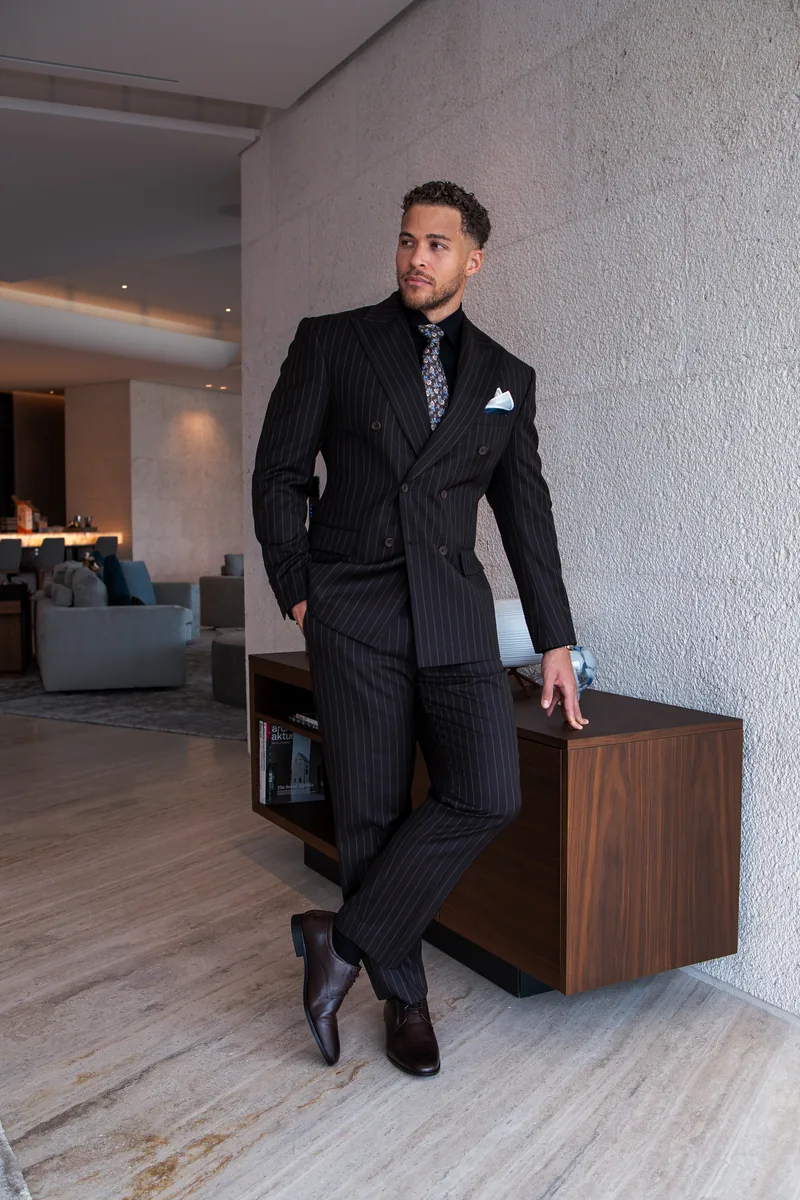
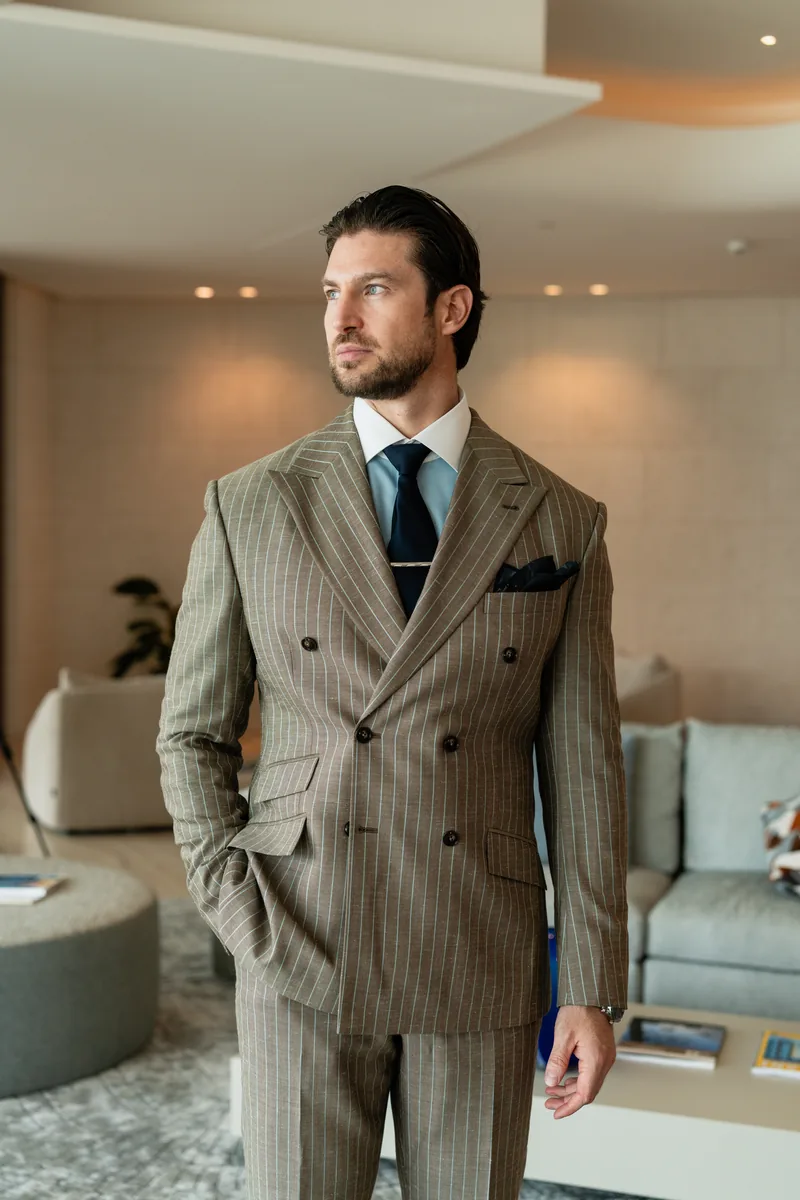
- A pattern. A fine pinstripe, chalk stripe or discreet check in navy or grey adds variety without losing formality.
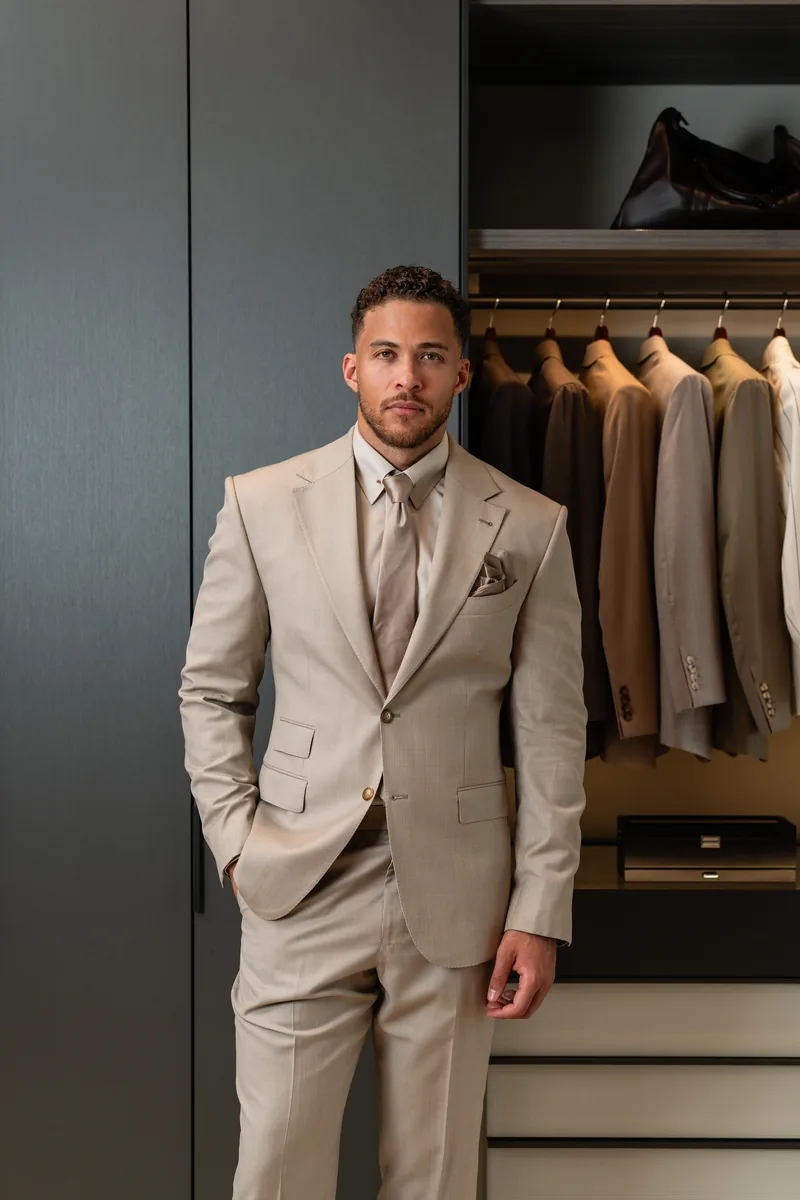
- A relaxed option. A navy blazer with grey trousers, or a suit in a softer colour such as tan or stone, for Fridays, client lunches and offices with a lighter dress code.
Avoid starting with black. It reads as evening or ceremonial wear in most business settings and is harder to pair with shirts and ties than navy or grey.
What do Dubai offices expect?
Dress codes in Dubai vary widely by industry. In many DIFC banks, law firms and advisory practices, a suit and tie is still standard for client-facing roles. In Business Bay, Downtown and Dubai Media City, more offices lean towards a jacket without a tie, or a suit worn with an open collar. Government and semi-government meetings usually call for a conservative suit.
Because of that range, build your first two or three suits so they work both ways: with a tie for formal meetings and with an open collar for everything else. That mostly comes down to the shirt collar. A semi-spread collar with enough height looks right with a tie and stands up neatly without one.
Which cloths work for an executive in Dubai?
Your business suits have to cope with two climates in one day: heat outside and cold air-conditioning inside. The cloths that manage this best are lightweight, breathable wools.
- Tropical wool (around 230 to 260 g per metre) is the everyday choice. It breathes, drapes well and recovers overnight.
- High-twist wools, often called fresco, are even more resistant to creasing. They are ideal if you travel for work or spend long days in and out of meetings.
- Wool and mohair gives a crisp, slightly lustrous finish for evening events and business dinners.
- Linen is too relaxed for most formal offices, but a wool, silk and linen blend can work for a lighter dress code.
Our guide to the best suit fabrics for Dubai heat compares each cloth in detail. Construction matters too: a half-lined jacket with a sewn canvas and a soft shoulder will feel far cooler than a fully lined, glued jacket in the same cloth.
Shirts: the part of the wardrobe that works hardest
In Dubai, a shirt is a one-wear garment. Plan the shirt wardrobe accordingly:

- Start with white and light blue. Between them, they go with every navy and grey suit you will own.
- Add fine stripes and subtle checks once the basics are covered.
- Choose the cloth for the climate. Fine cotton poplin is cool and crisp. Twill is a little heavier, drapes well and creases less. Our shirts are cut in cottons such as Egyptian and Sea Island cotton.
- Pick cuffs to match your week. Button cuffs are practical for daily wear; double cuffs suit formal meetings and evening events.
Because a bespoke shirt is cut from your own pattern, the collar sits properly under the jacket and the sleeve shows the right amount of cuff, which is hard to achieve with shirts bought off the rack.
The one-pattern method
Most men build a business wardrobe one suit at a time, from different shops, in different cuts. The result is a wardrobe that fits in several slightly different ways.
The one-pattern method reverses that. At Ateliier De Soul, our master tailors draft a single pattern to your measurements, shoulder slope, posture and natural silhouette. The fittings refine that pattern until it is right. From then on, every suit and shirt in your wardrobe is cut from it. The benefits are practical:
- Every suit fits the same way. No favourite suit and two that never feel quite right.
- Shirts and jackets work together. Collars sit under lapels and cuffs show correctly across the whole wardrobe.
- Adding to it is simpler. Your pattern stays on file and is refined over time, so the next suit starts from a proven fit rather than a blank sheet.
Wardrobe bundles: The First Edit and The Foundation Edit
We offer two wardrobe collections built on this method, each cut from one personal pattern:
- The First Edit, AED 4,599: two bespoke suits and three bespoke shirts, with private fittings and hand-finished details. A good fit for clients who wear a suit one to three days a week.
- The Foundation Edit, AED 6,999: three bespoke suits and five bespoke shirts, with a personal design consultation, curated fabric selection, private fittings, priority appointments and wardrobe guidance. Suited to clients who wear a suit most days.
Either collection can be the base of a larger wardrobe: add suits and shirts from the same pattern as your role or schedule changes. See the details on our wardrobe bundles page.
Fitting a wardrobe around a busy diary
Time is usually the real obstacle for executives, not budget. Two things help.
Let the tailor come to you. With The Moving Tailor, consultations and fittings take place at your office, home or hotel, whether that is in DIFC, Business Bay, Downtown or elsewhere in Dubai. A fitting fits comfortably into a lunch break or between meetings. Read more about our home and office tailor service.
Plan ahead of your busy season. A bespoke suit typically takes six to eight weeks from consultation to final fitting. If you have a new role, a heavy travel quarter or the winter events season ahead, start two months before you need the first suit.
Looking after a business wardrobe in Dubai
- Rotate. Give each suit at least a day off between wears.
- Hang it properly. Use wide, shaped wooden hangers and empty the pockets.
- Brush and steam rather than clean. A clothes brush and a steamer handle most of the daily care; limit dry cleaning to a few times a year.
- Let it breathe. Store suits in breathable covers, not plastic, which traps humidity.
- Wash shirts after every wear and have them pressed rather than tumble-dried.
To start your wardrobe, book an appointment at our atelier in Oud Metha or at your office, or message us on WhatsApp at +971 56 506 6543 and tell us how many days a week you wear a suit.
Frequently asked questions
How many suits does a professional need in Dubai?
If you wear a suit every working day, three is the minimum and four or five is ideal, so that each suit can rest between wears. If you wear a suit two or three days a week, two suits are usually enough to start.
What colour should my first business suit be?
Navy. It is the most versatile business colour, works with almost every shirt and tie, and suits formal and relaxed offices. Charcoal or mid-grey is the natural second suit.
How many shirts do I need for a week of work in Dubai?
At least five, because in Dubai’s heat a shirt is worn once before washing. Eight to ten gives you a comfortable rotation and time for laundering and pressing.
What is the best suit fabric for the office in Dubai?
A lightweight tropical wool or a high-twist wool in navy or grey. Both breathe in the heat, recover from creases and look sharp in air-conditioned offices.
Can a tailor come to my office in Dubai?
Yes. Through The Moving Tailor, Ateliier De Soul holds consultations and fittings at your office, home or hotel anywhere in Dubai, including DIFC, Business Bay and Downtown.